
Sivakasi, India's fireworks capital, is eyeing global markets as green crackers, rising demand and interest from overseas buyers offer a chance to challenge China's dominance.

The subtext here is that nobody else really matters to America today; only China, because nobody else can truly hurt them, points out Mihir S Sharma.

The International Cricket Council (ICC) is actively pursuing a strategy to expand cricket in China, leveraging the sport's recent inclusion in the Olympics. Plans include establishing a Centre of Excellence, supporting a Tier 2 event, and promoting women's cricket, with significant investment and collaboration with the Chinese Cricket Association to embed the sport deeper into the country's sporting system.

Xi's bilateral meeting with Modi was substantial and readouts from both sides gave indications of rapprochement, if not a reset of bilateral relations between India and China, notes Ambassador T P Sreenivasan.

India and China are in what experts call 'a cooperation-versus-competition situation'.

This development comes against the backdrop of Beijing announcing Chinese names for some places in Arunachal Pradesh, which the neighbouring country claims as the southern part of Tibet.

China has called for stronger global governance of artificial intelligence, advocating for international cooperation to develop the technology for humanity's benefit while preventing it from getting out of control. This comes amidst warnings from leading AI researchers in the US about potential existential risks, with China emphasizing both rapid development and robust safeguards, including its new AI Safety Governance Framework 3.0. The issue is expected to be a key topic in upcoming US-China talks.

China has announced new export controls on key machinery, including tunnel boring machines, walking excavators, and dredger components, citing national security. These restrictions, effective November 18, could significantly impact India's infrastructure projects, such as metro systems and high-speed rail lines, as China has previously limited such exports to India.

United States Treasury Secretary Scott Bessent has warned that Iranian airlines could be effectively shut out of international travel from Wednesday, September 23, as Washington threatens secondary sanctions against foreign companies that continue providing services to Iran's carriers.

Chinese President Xi Jinping's arrival in Washington marks a pivotal moment for global diplomacy, as he advocates for a "partners, not rivals" approach to US-China relations amidst high-stakes discussions on trade, technology, and international stability.

Volkswagen, a long-standing but minor player in India's fiercely competitive automotive sector, is now exploring a strategic partnership with the JSW group, aiming to revitalise its market presence, enhance profitability, and potentially establish India as a key export hub for electric vehicles.

Chinese President Xi Jinping is in New Delhi for the 18th BRICS Summit, where he is scheduled to hold bilateral talks with Prime Minister Narendra Modi. This visit, his first to India in nearly seven years, comes amidst efforts to normalise India-China relations following the 2020 Eastern Ladakh standoff and is expected to have significant implications for bilateral ties and BRICS cooperation.

Flash floods in Tibet's Gyirong County, near the China-Nepal border, have resulted in five deaths and 558 missing individuals, including 260 foreign nationals. The disaster also caused significant casualties in Nepal and disrupted infrastructure. Rescue operations are underway, and concerns are rising over a newly formed barrier lake that poses a risk of further flooding.

Chinese President Xi Jinping has ordered extensive rescue operations following devastating flash floods and mudslides near the China-Nepal border in Tibet. The disaster has caused heavy casualties, left nearly 400 people missing, including 105 Indians and 37 NRIs, and damaged infrastructure. Emergency teams have been deployed, and efforts are underway to evacuate residents and provide medical aid.

A new study published in AGU Advances reveals that extreme heat events are becoming more frequent and expanding beyond traditional summer months globally. This expansion is asymmetric, occurring earlier in spring in regions like western Europe and northwestern India, and later into autumn in areas such as the western US and eastern China. Researchers highlight the challenges this poses for human acclimatisation and community preparedness, as existing infrastructure like cooling centres are built around historical summer calendars.

This article details the quarter-century journey of BRICS, from its inception as an economic acronym by a Goldman Sachs economist to its current status as an expanded eleven-member international bloc. It highlights its growth, key historical moments, and the significance of its upcoming summit, particularly with Iran's renewed importance in discussions.

China has deployed 72 "robot employees" across Beijing's municipal parks to perform various tasks like cleaning, patrolling, guiding visitors, and pest control. This initiative is part of China's "Robot Plus" strategy, driven by an ageing population and labour shortages, and showcases the growing domestic service robot market. These AI-powered robots enhance efficiency and visitor experience in popular attractions like the Summer Palace and Zizhuyuan Park.
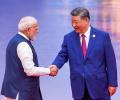
India's dual pursuit of a robust strategic partnership with Washington and a pragmatic, tension-management policy with Beijing represents the essence of modern multi-alignment. By embracing economic pragmatism, learning to compartmentalize political differences, and engaging in continuous dialogue, India can secure its borders, grow its economy, and contribute to a stable, multipolar Asian century, points out Ambassador Rajasekhar.

'Eastern Ladakh set the relationship back by about 10 steps. So far, especially since Galwan, we may have taken just 4 steps forward.'

A foreign brokerage predicts that private investments in Indian AI startups are rapidly growing, with potential listings adding up to USD 100 billion to India's market capitalisation over the next two to five years. Goldman Sachs reported a tripling of PE investment in Indian AI startups in 2025 and highlighted India's rising global rank in AI funding and new AI companies.

At just 13, Yu Zidi claimed her second Asian Games gold by smashing the 200m IM Asian record, finishing only 0.40 seconds behind Summer McIntosh's world record.

'The Chinese military cannot advance much in Ladakh, even if they want to.' 'Similarly, in Arunachal Pradesh, they can rename a village or two, intrude here or there, but cannot do much more realistically.'

China on Friday said the collapse of a high-altitude glacier in Nepal may have triggered the massive flash flood disaster that engulfed the Tibet-Nepal border, killing hundreds and causing widespread damage.

The US announced a 60-day pause on sanctions against Russia and tariffs on other countries, including India, to analyse the global economic impact. This decision, made via an executive order by Trump, has drawn significant criticism from both Republicans and Democrats, who had previously passed the Lindsey O. Graham Sanctioning Russia and Iran Act. US officials stated the waiver allows for assessment of global energy pressures and European allies' refusal to impose secondary sanctions on Russian oil buyers.

Bangladesh-China and Bangladesh-US relations have evolved from reluctant engagement to increasingly consequential strategic partnerships.

British Prime Minister Andy Burnham's past meetings with Manchester City chairman Khaldoon Al Mubarak have come under scrutiny following criticism of Burnham's initial response to the club's financial rule breaches.

US President Donald Trump has issued a waiver from sanctions under the Sanctioning Russia and Iran Act, citing national interest. This move comes after a deal with Russia for diesel supply and ahead of a US official's visit to India, where concerns about the act's impact on India's oil imports were raised.

Nepal's former Forest and Environment Minister Madhav Prasad Chaulagain has expressed concern over the lack of timely information exchange with China ahead of the devastating floods, stating that the disaster's scale could lead to an 'unbelievable' rise in the death toll.

'All these reports and announcements by the US seem like attempts to gain a lever in trade deal negotiations with India.'
Bharti Airtel Chairman Sunil Mittal has called for proactive regulation of Artificial Intelligence, stating that waiting for an "accident" before implementing safeguards would be "foolish." Speaking at the Bloomberg New Economy Forum 2026, Mittal highlighted the struggle of governments to keep pace with AI's rapid growth and emphasised the need for a global regulatory framework, similar to the aviation sector, to ensure national security and responsible development.

Nepal has launched a diplomatic initiative to secure climate-related compensation from major greenhouse gas emitters, asserting that post-disaster assistance for recent deadly flash floods should be viewed as a moral and legal liability, not charity. Foreign Minister Shisir Khanal highlighted Nepal's disproportionate suffering from global warming despite negligible emissions, citing rapid glacier melt and extreme mountain disasters. The country has formally approached the Loss and Damage Fund board for urgent financial aid following a catastrophic flash flood in the Bhotekoshi river basin.

Geopolitical disruptions have made shipping times unpredictable and raised costs for Volvo Car India, which may have to increase vehicle prices if the situation persists, its Managing Director Jyoti Malhotra said on Monday.
Donald Trump has ruled out using nuclear weapons or ground troops against Iran, despite the US military developing strike options including the "mother of all bombs" (MOAB) for Iranian energy and nuclear facilities. Trump clarified the MOAB is not nuclear and expressed confidence in non-nuclear options. He also discussed nuclear disarmament talks with Russia and China and his determination to prevent Iran from acquiring nuclear weapons, even as questions arise about MOAB's effectiveness against deeply buried targets.

External Affairs Minister S Jaishankar stated that the world is entering an age of flux marked by conflicts and tariff volatility, requiring India to respond effectively to these challenges. He reiterated India's consistent stance on the Russia-Ukraine conflict, advocating for dialogue and diplomacy, and highlighted India's efforts to engage with both sides. Jaishankar also emphasised India's role in championing the voice of the Global South and navigating complex strategic partnerships in a multi-aligned world.
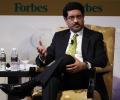
Aditya Birla Group Chairman Kumar Mangalam Birla stated on Tuesday that investments in artificial intelligence should be driven by potential returns, not by a "fear of missing out." Speaking at the 2026 Bloomberg New Economy Forum, Birla indicated that his group would adopt AI more gradually than previously planned, moving away from an "AI arms race" mentality. He also discussed the varied applications of AI across different business sectors, the challenges of capital allocation, and the impact of geopolitical events on global companies.

Two-time Olympic medallist PV Sindhu advanced to the second round of the Arctic Open Super 500 tournament in Finland. While Sindhu secured a comfortable win, other Indian shuttlers like Unnati Hooda, Ashmita Chaliha, and Malvika Bansod faced defeats, marking a mixed day for the contingent. Tharun Mannepalli and Rounak Chouhan, however, successfully entered the men's singles main draw.

Union Minister Mansukh Mandaviya inaugurated the BRICS Traditional and Indigenous Sports Demonstration Games 2026 in Ahmedabad, emphasising the role of traditional sports in reflecting cultural identity and fostering international cooperation. The one-day event, hosted by the Ministry of Youth Affairs and Sports, brought together delegations from BRICS and partner countries to showcase indigenous sporting practices like Mallakhamb, Yogasana, and Kalaripayattu from India, alongside Wushu from China and Sambo from Russia. Gujarat Deputy Chief Minister Harsh Sanghavi also highlighted India's rich sporting heritage and proposed initiatives for global promotion and preservation of traditional sports.
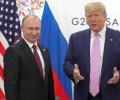
Former President Donald Trump's recent deal with Russia to supply diesel to the US and global markets has ignited a political firestorm, drawing sharp criticism from Ukraine's President Volodymyr Zelenskyy, Democratic leaders, and a segment of Republicans, despite the US Treasury lifting sanctions on Russian diesel supplies.
MI5 Director General Ken McCallum has issued a stark warning about artificial intelligence "supercharging" cybersecurity challenges and national security risks. He revealed that terrorists are already exploiting AI for attack capabilities and announced the launch of the AI Threat Assessment Centre (AITAC). McCallum also highlighted a fourfold increase in threats from hostile states like Russia, Iran, and China, urging public resilience.

Chinese President Xi Jinping called for global collaboration in artificial intelligence development, emphasising a "symphony of global collaboration" over a "solo performance" by any single nation. Speaking at the World Artificial Intelligence Conference in Shanghai, Xi highlighted the need for ethical AI governance, shared prosperity, and addressing challenges like the widening digital divide. He also announced China's commitment to support developing countries with 5,000 AI research projects and training programmes. The event also saw 29 countries sign an agreement to establish the World Artificial Intelligence Cooperation Organisation (WAICO) in Shanghai.
